Historical Graphic Novels
Students summarize important aspects of a historical event by creating graphic novels or comics.
Task
Graphic storytelling is a powerful way to make complex information easier to understand and can make history come alive.
Rather than reading a graphic novel about a person or event, in this project, students create one. As they summarize research and interpret key ideas and perspectives, imagine the sensory details of the past, and condense lengthy text into concise captions, they deepen their own understanding.
Engage
Begin by exploring examples of graphic novels that depict real historical events, such as Art Spiegelman's Maus. Be sure to have a couple of examples from your library media center that are age and subject appropriate and can serve as high quality examples. Many students have already read one of the I Survived graphic novels from Scholastic.
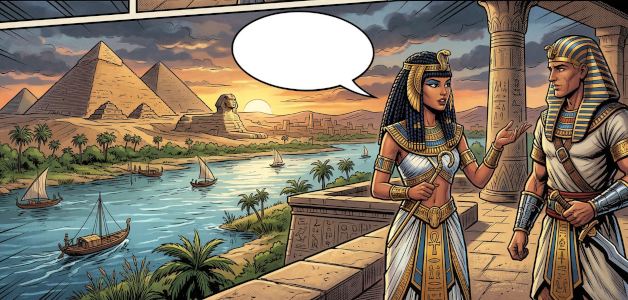
Discuss how illustrators depict setting and emotion, how speech bubbles and captions differ from paragraphs, and how choices about what to show and what to leave out can affect the reader’s understanding.
You will also want to review the unique vocabulary of graphic novels such as panels, gutters, speech bubbles, and captions.
- Panel - box that shows one moment in the story.
- Gutter - empty space (pauses and changes) between panels.
- Speech Bubble - what a character is saying out loud.
- Thought Bubble - what a character is thinking.
- Caption - text that provides extra information, like setting.
Work as a class to brainstorm a list of significant historical events you have recently studied that would be visually interesting to depict. Assign an event to students or let them choose from the list you have created (and edited) together.
Provide reference materials or suggestions for student research. As they take notes about the event, explore and explain strategies for summarizing the information they find. Cornell-style notes are a great way to help students begin writing concise summaries.
A specific perspective combined with a powerful narrative can make history come alive. So before students transition from research to graphic novel creation, they need to choose the perspective of a specific individual who lived through the event.
Once they have chosen the character, have them use a cluster organizer to identify character traits and complete an empathy map to get a sense of how they might have experienced the event.

Create
Have students revisit their notes and create a storyboard, or sketch outline, showing each panel. This will help them decide which part of the event each panel will convey and how visuals and text will work together to share key ideas.
This is a great time for students to begin writing the dialogue for the speech bubbles and additional text captions to provide historical context.
The final graphic novels can be created with pens, paper and colored pencils. However, using a digital design tool, like Wixie, makes it easy for students to create and reuse original art, find clip art images and backgrounds and not only write, but edit text. Students upload images of their own hand-drawn characters to give the project a personal artistic touch.
Since graphic novels require a high level of synthesis, encourage students to consider the gutter. or the space between panels, where the reader must infer what happened in the time that passed.
Graphic novels are a lot of work and collaboration can help mitigate time and expertise requirements. For example a collaborative team could have designated roles for a Lead Researcher to verify facts, a Scriptwriter for dialogue, and a Visual Designer to manage the layout and aesthetic.
Whether students are working individually or in teams, they should revisit their storyboards to ensure that the historical sequence remains accurate while maintaining an engaging flow for the reader.
Share
This transformation of research into a published book gives students a sense of authorship over history. So when the graphic novels are complete, print copies to share in the classroom, school library, and with your community.
If you used a digital tool, like Wixie, export the final projects as PDFs to share with parents and the school community via your class website. You can even compile the individual stories into a digital class anthology!
Host a Comic-Con-style event for your community where students present their favorite panel or section and explain the historical evidence behind their visual choices, such as why they chose a specific costume or how a speech bubble reflects a real quote from a historical figure. This allows students to learn about more events and multiple perspectives through the creative work of their peers.
Assessment
The process of visual storytelling requires students to synthesize their research, identify the most critical moments of an event, practice advanced summarization skills, and translate complex historical accounts into a sequence of images and dialogue.
Use the research notes and planning pieces to evaluate students understanding of the historic event. The graphic novel outline, script and storyboard provide additional opportunities for formative assessments.
The final graphic novel provides a summative assessment of student comprehension, writing, and visual communication.
Use a rubric, like this example, to help students understand how they will be evaluated. You might include categories and criteria for historical accuracy, synthesis, writing, as well as media and technical design.
Resources
Art Spiegelman. Maus. ISBN: 978-0679406419
Don Brown. The Great American Dust Bowl. ISBN: 978-1328740878
BBC Maestro: Alan Moore. - Words per panel
Standards
C3 Standards for Social Studies
D1.5.6-8
Determine the kinds of sources that will be helpful in answering compelling and supporting questions, taking into consideration multiple points of views represented in the sources.
D2.His.1.6-8
Analyze connections among events and developments in broader historical contexts.
D2.His.4.6-8
Analyze multiple factors that influenced the perspectives of people during different historical eras.
D2.His.6.6-8
Analyze how people's perspectives influenced what information is available in the historical sources they created.
D2.His.14.6-8
Explain multiple causes and effects of events and developments in the past.
D2.Geo.4.6-8
Explain how cultural patterns and economic decisions influence environments and the daily lives of people in both nearby and distant places.
D2D2.Geo.6.6-8
Explain how the physical and human characteristics of places and regions are connected to human identities and cultures.
ISTE Standards for Students:
4. Innovative Designer
Students use a variety of technologies within a design process to identify and solve problems by creating new, useful or imaginative solutions. Students:
a. know and use a deliberate design process for generating ideas, testing theories, creating innovative artifacts or solving authentic problems.
6. Creative Communicator
Students communicate clearly and express themselves creatively for a variety of purposes using the platforms, tools, styles, formats and digital media appropriate to their goals. Students:
a. choose the appropriate platforms and tools for meeting the desired objectives of their creation or communication.
b. create original works or responsibly re-purpose or remix digital resources into new creations.
d. publish or present content that customizes the message and medium for their intended audiences.

Melinda Kolk is the Editor of Creative Educator and the author of Teaching with Clay Animation. She has been helping educators implement project-based learning and creative technologies like clay animation into classroom teaching and learning for the past 15 years.


 Most Read