The case for boredom
Why creativity thrives with empty time

In a world where entertainment is always within reach, boredom has become something we try to eliminate. A moment of waiting gets filled. A lull in activity gets fixed. When a student or child says, "I'm bored," we respond with options, suggestions, or a screen.
But what if boredom isn't something to avoid? What if it’s where creativity begins?
Boredom is where creative thinking begins
Creativity doesn't happen when the brain is busy consuming. It happens when the brain has space to wander, connect ideas, and imagine new possibilities.
When students are constantly engaged with content, they stay in a reactive mode—responding, clicking, watching. But when that input disappears, the brain shifts inward. It begins revisiting experiences, asking questions, and forming new ideas.
Of course, this shift isn't always comfortable. Boredom often shows up as restlessness, distraction, or frustration. Kids may fidget, wander, or complain as they move through a phase of uncertainty where they don’t yet have an idea, but are searching for one.
Creativity lives just beyond that discomfort. If we interrupt that moment, we stop the creative process before it has a chance to unfold.
Boredom helps students move from consumer to creator
One of the most important shifts in learning is moving from consuming ideas to creating them. Boredom quietly supports that transition.
Without something to react to, kids are left with a choice: disengage or create. With the right environment, support and opportunity, they might begin to:
- invent games
- sketch ideas
- build structures
- tell stories
- explore "what if?" questions
These moments are not just creative, they are deeply empowering — helping kids learn that they don't need to wait for instructions or entertainment.
This is the foundation of creative confidence.
Designing for productive boredom
Today's learners have fewer opportunities to experience boredom. Devices and on-demand content fill nearly every gap in attention.
While this keeps students occupied, it also reduces the time they spend initiating ideas on their own. Over time, this can lead to a dependence on external input and hesitation when faced with open-ended tasks.
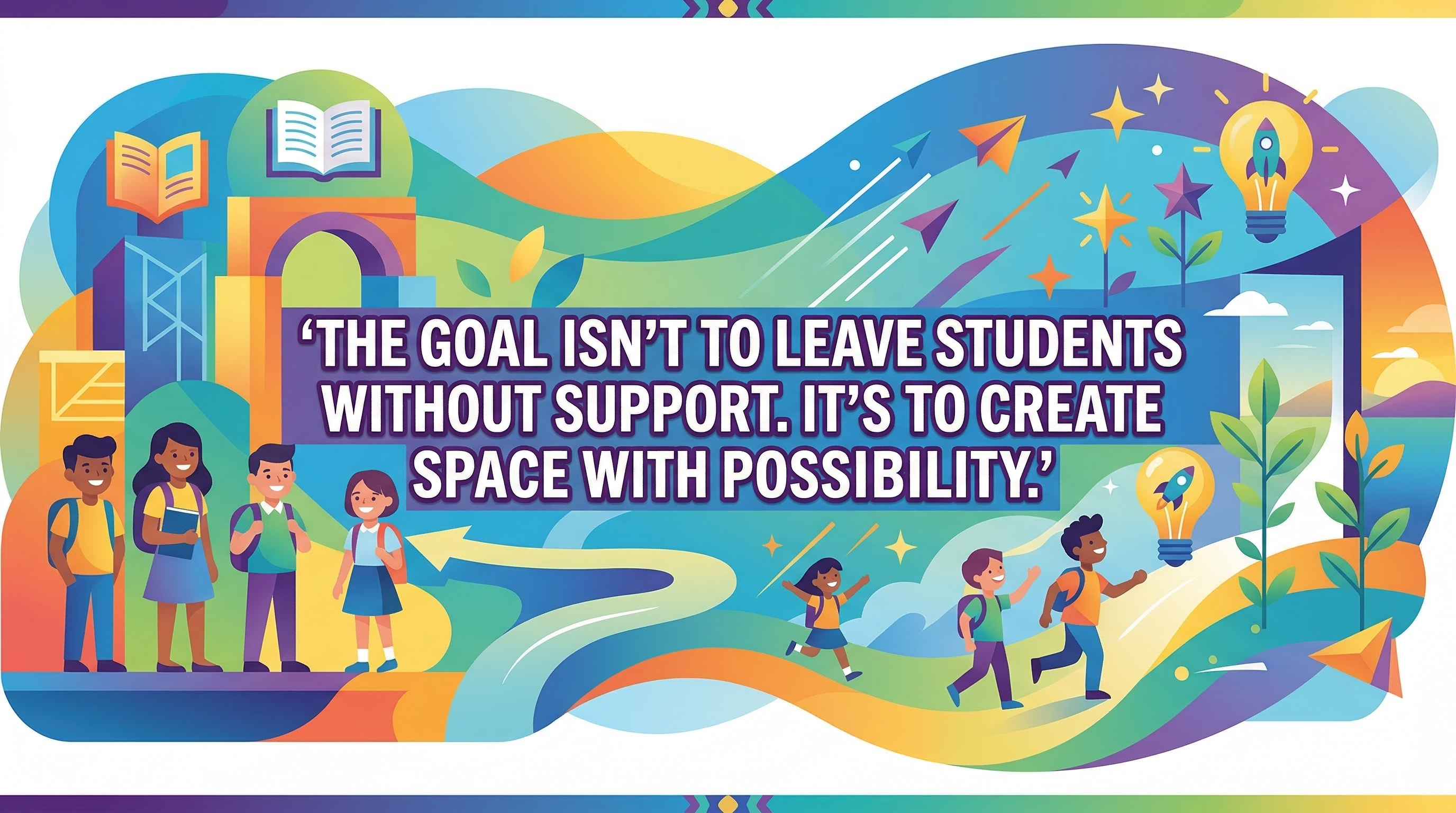
If we want students to think creatively and independently, they need time without constant stimulation. They need space where nothing is happening—so something can begin.
The goal isn't to leave students without support. It's to create space with possibility.
In the classroom, this can mean protecting short windows of unstructured time and providing access to open-ended materials like paper, markers, building supplies, or digital creation tools. These give students a way to act on emerging ideas.
It also means changing how we respond to boredom. Instead of solving it immediately, we can treat it as part of the process. A simple shift like, "That's a great place to start. What might you try?" encourages students to move from waiting to creating.
Let's rethink boredom!
Boredom in the classroom is often seen as a gap in learning, but it may be one of the most important conditions for it. It creates the space where students move beyond reacting to the world and begin shaping it.
In that quiet space, ideas form. Questions emerge. Students begin to imagine and create.

Melinda Kolk is the Editor of Creative Educator and the author of Teaching with Clay Animation. She has been helping educators implement project-based learning and creative technologies like clay animation into classroom teaching and learning for the past 15 years.




 Most Read